
Almost 80% of Indian organizations conduct candidate checks, and 75% say screening helps them secure better talent. Effective screening interview questions should therefore be structured, role-relevant, consistently scored, and paired with targeted follow-ups, not treated as casual conversation.
A strong initial phone screen has a narrower job than a full interview. It should gather comparable evidence quickly, confirm essential requirements, identify likely behavioral patterns, and decide who should progress. In India, that first human decision gate matters in a high-volume hiring environment. One India-focused hiring report says corporate roles receive an average of more than 250 applications per opening, while around 70% to 75% of CVs are rejected before a recruiter sees them. The same report identifies keyword relevance as a top shortlisting factor for 55% of hiring managers.
The ten categories below organize a phone screen around what it must establish: evidence of capability, likely behavior, motivation, communication, credibility, and role-specific judgment. Each category includes a core question, a targeted probe, a four-level scoring rubric, red flags, ideal-answer signals, and a practical way for AI to assist without replacing human judgment.
Career Central provides AI-driven phone screening, first-round interviews, and coding assessments for organizations. Automation can improve consistency and reduce repetitive work, but final hiring decisions should remain governed by validated criteria, documented evidence, and appropriate human review.
Table of Contents
- 1. Behavioral Questions Using the STAR Method
- 2. Technical Screening Questions
- 3. Situational and Hypothetical Questions
- 4. Competency-Based Questions
- 5. Skills Assessment and Work Sample Questions
- 6. Motivation and Values Questions
- 7. Structured Interview Questions With Rating Scales
- 8. Communication and Soft Skills Questions
- 9. Experience and Background Verification Questions
- 10. Role-Specific Scenario and Case Study Questions
- Screening Interview Questions: 10-Item Comparison
- Turn Questions Into a Consistent Screening System
1. Behavioral Questions Using the STAR Method
Behavioral questions ask candidates to describe what they did in a past situation. The STAR structure, Situation, Task, Action, and Result, gives the interviewer a reliable way to separate personal contribution from team-level claims.
Ask: “Tell me about a time you had to resolve conflict with a team member. What happened, what did you do, and what was the result?”
Useful alternatives include:
- Missed deadline: “Describe a project where you missed a deadline. How did you handle it?”
- Rapid learning: “Share an example of when you had to learn a new skill quickly on the job.”
- Ownership: “Tell me about a problem you noticed before anyone asked you to address it.”
The most important probe is simple: “What specifically did you do?” Follow it with, “What changed because of your actions?” Candidates who owned the work can usually describe decisions, sequence, constraints, and consequences without retreating into “we” statements.
Scoring rubric
- 4, strong evidence: Gives a specific situation, explains personal actions clearly, acknowledges trade-offs, and describes a credible result or lesson.
- 3, usable evidence: Provides a relevant example with clear actions, though the result or complexity is less developed.
- 2, limited evidence: Offers a broad story with little personal ownership, weak detail, or an unclear outcome.
- 1, insufficient evidence: Gives a hypothetical answer, blames others, avoids the question, or cannot explain what happened.
Red flags include polished but interchangeable stories, excessive team language, and results that appear disconnected from the candidate's actions. An ideal answer doesn't need dramatic success. A thoughtful account of a failed deadline can be stronger than a vague success story if the candidate explains the cause, response, communication, and subsequent adjustment.
AI can help identify STAR components, surface unanswered probes, and organize evidence for comparison. It shouldn't decide that a candidate is “authentic” from phrasing, accent, emotion, or speaking style. A recruiter still needs to review the underlying example and score it against the same rubric used for every candidate.

2. Technical Screening Questions
Technical screening questions should confirm the minimum job-related capability required for the next stage. They aren't a miniature final interview. A phone screen should test foundations and reasoning, then reserve deeper architecture, debugging, or domain evaluation for a properly designed assessment.
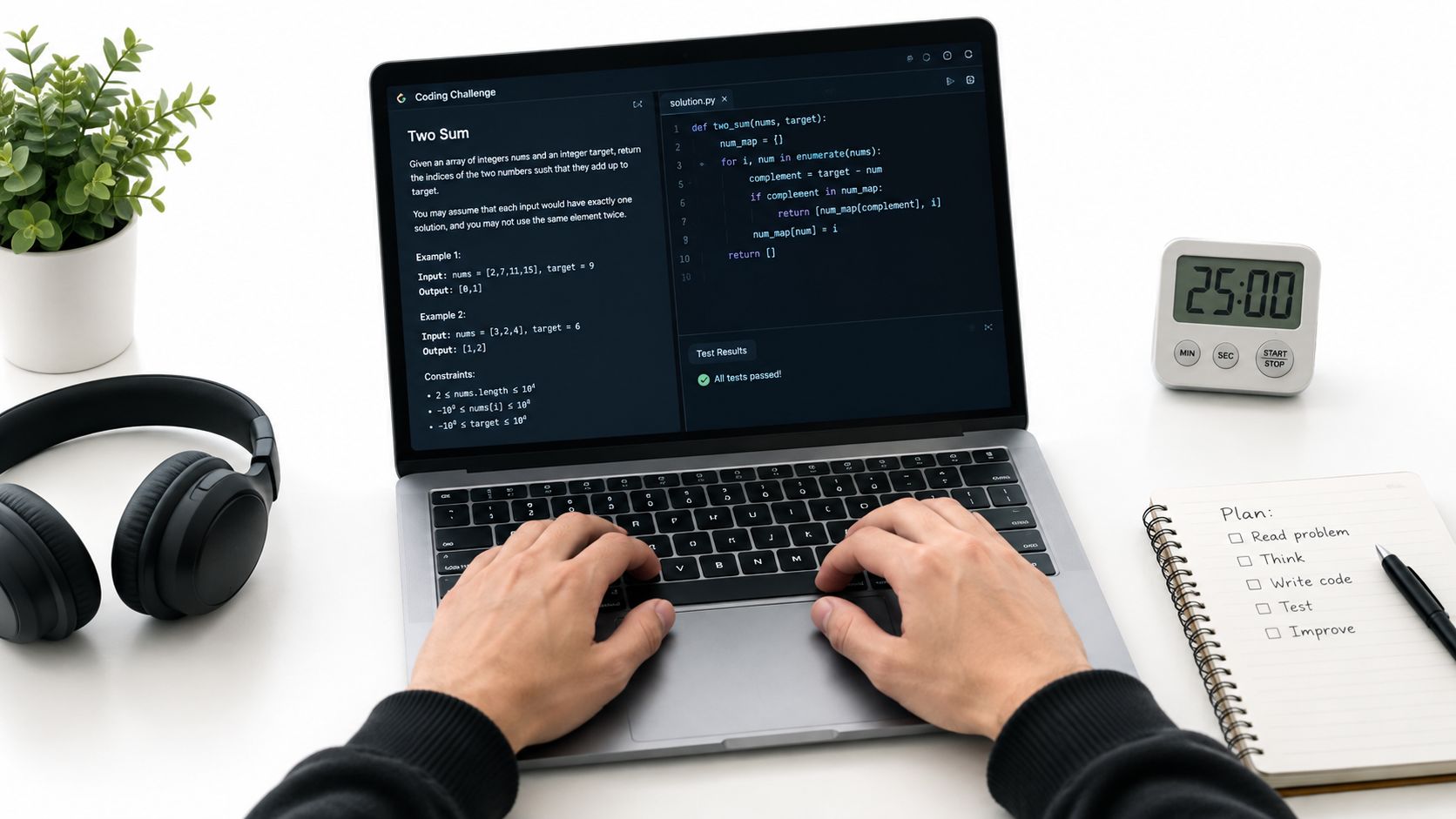
Ask: “Walk me through how you'd solve a problem that requires reversing a string without using built-in functions.” For a data role, ask, “Explain the difference between INNER, LEFT, RIGHT, and FULL OUTER joins, and give an example of when you'd use each.”
Match the question to the role
A junior developer may need to explain a basic algorithm and reason through edge cases. A senior engineer may need to discuss trade-offs in a database schema, such as how an e-commerce system would handle customers, orders, inventory, and payments. The question should expose thinking, not reward memorized terminology.
A practical four-level rubric works well:
- 4, strong evidence: Explains the approach accurately, identifies assumptions and edge cases, and discusses trade-offs in language appropriate to the role.
- 3, usable evidence: Understands the core concept and reaches a sound approach with minor gaps.
- 2, limited evidence: Recognizes some terminology but struggles to apply it to a practical problem.
- 1, insufficient evidence: Gives an incorrect explanation, guesses repeatedly, or cannot describe a workable approach.
Red flags include answers copied from definitions, confidence without reasoning, and inability to clarify an assumption. Don't penalize a candidate merely for choosing a different valid method. Score correctness, reasoning, and relevance to the role.
AI can deliver standardized coding prompts, run permitted test cases, detect copied patterns, and summarize technical explanations. It shouldn't make an unsupported “hire” recommendation from code style, typing speed, or one failed test. Use a calibrated technical rubric and have a qualified reviewer inspect borderline results. Teams designing this process can use this complete guide to technical interview assessment platforms when comparing assessment workflows.
3. Situational and Hypothetical Questions
Situational questions test how candidates say they would respond to a future problem. They're particularly useful when applicants lack direct experience, but they should complement behavioral evidence rather than replace it.
Ask: “A client is extremely upset about a service issue. Walk me through your response from the first conversation to the internal follow-up.” For an operations role, ask, “You discover that a team member isn't completing a critical task. What would you do?”
The probe should expose reasoning: “Why would you take that approach?” Add, “What would you do if the first step didn't work?” This prevents candidates from winning the question with a socially desirable first sentence.
What a good answer reveals
- 4, strong judgment: Clarifies facts, takes appropriate ownership, protects customers and colleagues, escalates proportionately, and explains how the candidate would prevent recurrence.
- 3, sound judgment: Identifies sensible actions and communication steps but misses a secondary risk or follow-up.
- 2, mixed judgment: Jumps to a solution without gathering information, or relies on escalation before attempting a reasonable first step.
- 1, weak judgment: Avoids responsibility, blames another person, ignores policy, or proposes an unethical shortcut.
Red flags depend on the scenario. In a values conflict, blindly following an instruction can be as concerning as refusing to engage without understanding the facts. In a client scenario, promising an outcome the candidate can't control shows poor judgment.
AI can present the same scenario consistently, capture the response, and flag missing dimensions such as clarification, escalation, or customer impact. It cannot reliably determine whether a proposed action fits your company's policy without role-specific criteria. Human reviewers should assess the reasoning and distinguish a genuine disagreement from a response that merely uses familiar ethical language.
Practical rule: Score the decision process, not the most agreeable sentence.
4. Competency-Based Questions
Competency-based questions work best when the organization has defined what success looks like for the role. Instead of asking broad questions about “fit,” map each prompt to a capability such as influencing without authority, adaptability, customer focus, or process improvement.
Ask: “Describe a time when you had to influence others without direct authority.” A follow-up probe could be, “What resistance did you face, and how did you change your approach?”
A useful competency rubric is:
- 4, advanced evidence: Demonstrates the competency in a complex context, adapts behavior to stakeholders, and explains a meaningful outcome.
- 3, proficient evidence: Gives a relevant example with appropriate behavior and a clear contribution.
- 2, developing evidence: Shows partial capability but needs prompting or describes a low-complexity example.
- 1, insufficient evidence: Uses a generic claim, gives an unrelated example, or cannot connect actions to the competency.
Each role doesn't need an unwieldy framework. Select the few competencies that distinguish success in the position, then weight them according to job requirements. A customer-support screen might emphasize listening, ownership, and de-escalation. A product role might emphasize prioritization, analytical thinking, and stakeholder influence.
Evidence beats labels
“I'm adaptable” is a claim. A story about adjusting a launch plan after customer research changed the product direction is evidence. Ask candidates to explain what changed, what they kept, what they dropped, and how they brought others along.
AI can map phrases and examples to predefined competency indicators, suggest missing probes, and compare evidence across candidates. It shouldn't infer leadership from assertive language or adaptability from enthusiasm. Hiring teams need to define observable behaviors first, then use AI to organize the evidence. A clear competency mapping framework helps prevent each interviewer from applying a different definition.
5. Skills Assessment and Work Sample Questions
A work sample asks candidates to perform a task that resembles the job. It can be more informative than a conversation because the evaluator sees how the candidate structures work, manages ambiguity, and produces an output.
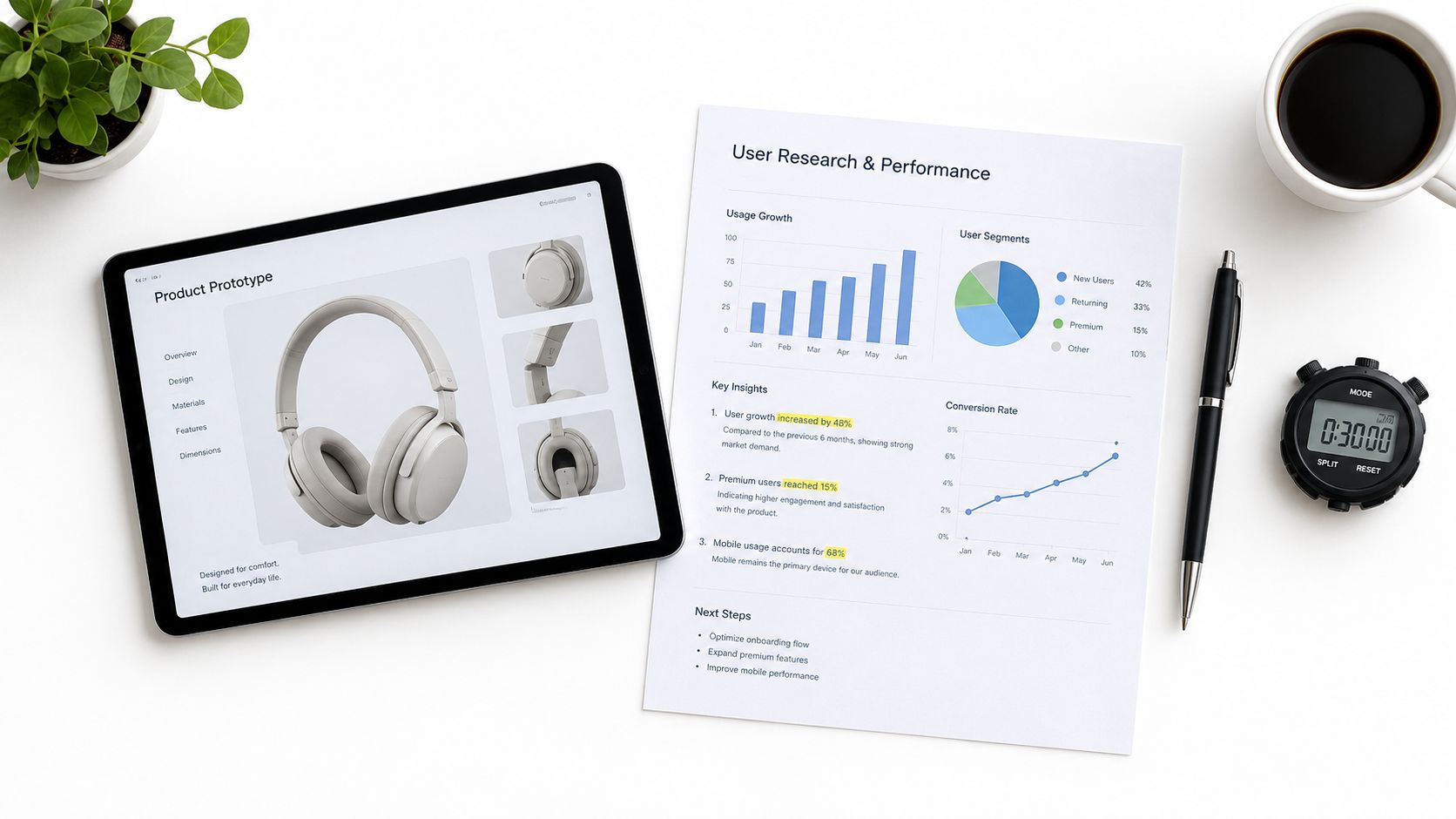
Ask: “Review this short customer dataset and identify the most important insight, the evidence supporting it, and the action you'd recommend.” Other examples include drafting an internal memo, creating a project plan, preparing a sales proposal, or solving a coding problem.
The trade-off is candidate effort. A short, realistic exercise can clarify capability. An unpaid project that resembles several days of real work can damage the candidate experience and reduce participation. Keep the instructions clear, state what will be assessed, and avoid testing tools that the role won't require.
Four-level work-sample rubric
- 4, strong output: Addresses the actual problem, makes assumptions visible, prioritizes effectively, and communicates a practical recommendation.
- 3, usable output: Produces a correct or useful result with minor gaps in structure, detail, or explanation.
- 2, limited output: Shows some relevant skill but misses important requirements or needs extensive direction.
- 1, insufficient output: Misunderstands the task, produces unusable work, or cannot explain the result.
Red flags include over-engineering a simple task, copying an answer without understanding it, and ignoring explicit constraints. An ideal response reflects the role's real decisions rather than presentation polish alone.
AI can distribute instructions, evaluate objective elements, compare outputs against a scoring guide, and flag possible copied material. Human reviewers should assess context, originality, and whether a candidate made a defensible trade-off. For substantial work, consider compensation and explain how the output will be used.
6. Motivation and Values Questions
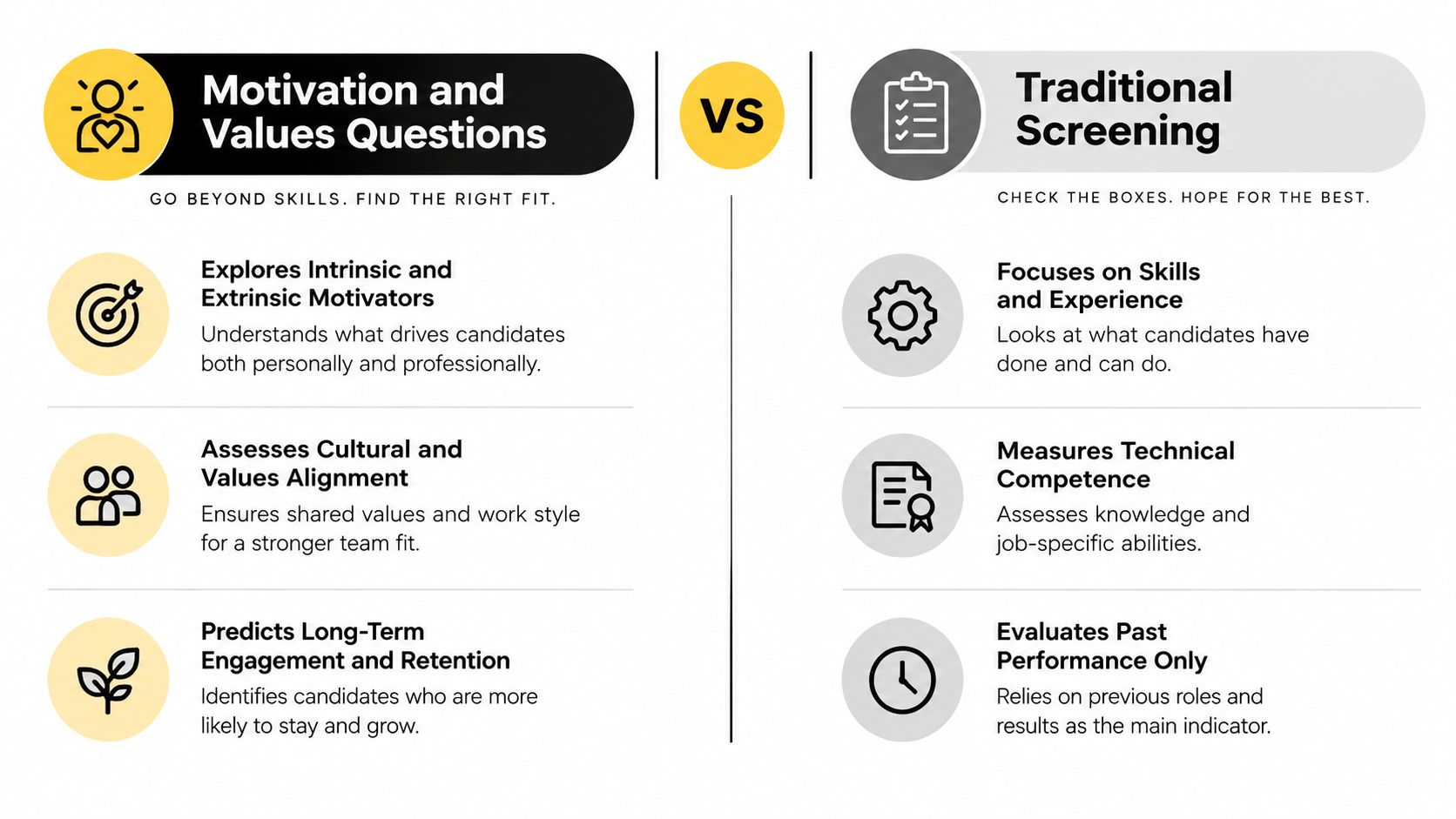
Motivation questions should test whether the role matches what the candidate wants to do, not whether the candidate can repeat the company's website language. A strong screen explores the work itself, the environment needed for performance, and the conditions that could lead to disengagement.
Ask: “Why are you interested in this specific role, and which part of the work would you most like to own?” Follow with, “What about this role would be less appealing to you?”
The second question often produces more useful evidence than another request for enthusiasm. It gives candidates room to identify a genuine trade-off and lets the recruiter compare expectations with the role's actual demands.
- 4, strong alignment: Gives specific, role-related reasons, understands the work, and describes values or preferences that match the position without pretending to be identical to the organization.
- 3, reasonable alignment: Shows credible interest and a generally accurate understanding of the role.
- 2, uncertain alignment: Relies on generic growth, brand, or compensation language and knows little about the actual work.
- 1, poor alignment: Seeks conditions the role can't provide, expresses unrealistic expectations, or cannot explain the move.
Red flags include rehearsed praise, a motivation centered only on title or prestige, and an inability to describe what success would feel like in the role. Don't confuse a reserved communication style with low motivation. Score specificity and alignment, not volume or charm.
AI can standardize prompts, summarize stated preferences, and identify topics requiring follow-up. Tone analysis shouldn't be treated as proof of enthusiasm or authenticity. Voice, culture, disability, language, and interview conditions can affect delivery. A human should decide whether the candidate's motivations fit the role and whether the organization can meet the expectations discussed.
7. Structured Interview Questions With Rating Scales
A structured screen gives every candidate the same core questions, in the same sequence, with the same scoring anchors. That consistency makes comparisons more defensible than relying on interviewer memory or conversational chemistry.
Ask: “Describe your experience with the required skill, including the most complex situation in which you used it.” Rate the answer with behavioral anchors rather than an unexplained number.
- 4, strong evidence: Uses the skill independently in a complex context, explains decisions, and shows results relevant to the role.
- 3, solid evidence: Has applied the skill in relevant work and can describe the approach with moderate detail.
- 2, limited evidence: Has exposure or training but little independent application.
- 1, no evidence: Has not used the skill or cannot explain its practical application.
Use the same follow-up rules as well. If one candidate receives three probes and another receives none, the scores aren't comparable. Interviewers can still ask a permitted clarification, but the process should specify which probes are available and when.
Calibrate before relying on scores
Have interviewers score sample answers independently, then discuss why they chose each level. Look for disagreement caused by vague anchors, different assumptions about seniority, or preference for a particular communication style.
AI can present questions, enforce sequence, capture ratings, flag missing scores, and identify outliers for review. It shouldn't normalize scores or erase disagreement. A high score from one interviewer may reflect leniency, while a low score may reflect an inappropriate standard. Review the evidence and the rubric together. For the difference between structured and conversational approaches, see this guide to structured and unstructured interviews.
8. Communication and Soft Skills Questions
Communication should be assessed through both the answer and the interaction. The relevant question isn't whether a candidate sounds polished. It's whether they can explain a complex idea, listen to the actual problem, adapt to the audience, and handle disagreement without damaging the working relationship.
Ask: “Tell me about a time you had to explain a complex concept to someone without a technical background.” Probe with, “How did you know the person understood you?”
For a collaboration-heavy role, ask, “Describe your approach to receiving critical feedback.” For a client-facing role, ask, “Tell me about a conversation where you had to communicate an unpopular decision.”
- 4, strong communication: Structures the answer clearly, adapts to the audience, demonstrates empathy, and explains how understanding or agreement was reached.
- 3, effective communication: Gives a relevant example and communicates the main point clearly, with limited detail about adaptation.
- 2, inconsistent communication: Provides a difficult-to-follow answer or focuses on personal intent rather than audience impact.
- 1, weak communication: Dismisses feedback, blames others, interrupts repeatedly, or cannot explain the situation.
Red flags must be handled carefully. Nervousness, an accent, disability-related communication differences, or an imperfect phone connection aren't evidence of poor collaboration. Focus on job-relevant behaviors and provide reasonable accommodations where needed.
AI can transcribe responses, surface unanswered questions, and help reviewers locate examples of listening, clarification, or feedback handling. Sentiment analysis shouldn't be used as a proxy for empathy, confidence, or suitability. A human must interpret context and assess whether the candidate's communication meets the role's actual requirements.
9. Experience and Background Verification Questions
Verification questions establish whether the resume, application, and interview describe the same professional history. In India, employment verification is used by 88% of employers and education verification by 83%, according to candidate-screening data on Indian organizations. Those checks make the early conversation more valuable, because a recruiter can clarify claims before investing time in later rounds.
Ask: “Walk me through your work history, focusing on the responsibilities you held in your most recent role.” Then probe a specific claim: “You mention expertise in this skill. Can you describe a project where you used it, what you personally delivered, and what happened afterward?”
- 4, strong credibility: Provides a coherent timeline, explains responsibilities precisely, and gives consistent examples that support the resume.
- 3, credible with minor gaps: Clarifies most details and explains ordinary uncertainty without changing the substance of the claim.
- 2, unresolved credibility: Gives vague answers, changes important details, or cannot explain a prominent achievement.
- 1, serious concern: Contradicts documented information, misrepresents qualifications, or refuses reasonable clarification.
A gap in employment isn't automatically a red flag. The relevant issue is whether the candidate can explain it consistently and whether the experience meets the role's requirements. Avoid intrusive questions unrelated to job criteria.
AI can compare resume fields with application responses and interview transcripts, flag date or title inconsistencies, and create a verification queue. It can't determine whether an inconsistency is deception, a formatting error, or a legitimate difference in title. Human reviewers should verify material concerns through appropriate, lawful processes and document the question asked, the response, and the reason for any follow-up.
10. Role-Specific Scenario and Case Study Questions
A role-specific case tests judgment in the context where the hire will operate. The strongest scenarios contain enough information to begin but leave room for clarifying questions. That lets the recruiter observe whether the candidate defines the problem before proposing an answer.
Ask a product candidate: “Our mobile app has declining user engagement. Walk me through how you'd diagnose the cause and decide what to do next.” A finance candidate could answer, “A client is considering a merger. Which financial and operational factors would you analyze before making a recommendation?”
A strong scenario rubric looks like this:
- 4, strong judgment: Clarifies the objective, identifies relevant evidence, builds a logical framework, considers risks, and recommends a proportionate next step.
- 3, sound judgment: Uses a sensible structure and reaches a defensible recommendation, though some risks or stakeholders remain underdeveloped.
- 2, partial judgment: Offers useful ideas but jumps between solutions without prioritization or sufficient diagnosis.
- 1, weak judgment: Reaches a premature conclusion, ignores key constraints, or cannot explain the reasoning.
Red flags include treating an ambiguous business problem as if it had one obvious answer, refusing to ask questions, and optimizing one metric while ignoring customers, compliance, cost, or operational feasibility. Score the thinking process, not whether the candidate guesses the answer your team already prefers.
AI can deliver consistent case prompts, capture clarifying questions, organize the response against the rubric, and flag missing considerations. It shouldn't select the “best” conclusion without understanding the company's objectives and constraints. Human reviewers need to assess whether the candidate's framework would work in the actual role.
Screening Interview Questions: 10-Item Comparison
| Screening Method | 🔄 Implementation Complexity | ⚡ Resource Requirements | ⭐📊 Expected Outcomes | 💡 Ideal Use Cases | 📊 Key Advantages |
|---|---|---|---|---|---|
| Behavioral Questions (STAR Method) | Moderate, structured format; requires interviewer training | Low–Moderate, interviewer time & rubrics | High ⭐⭐⭐, strong predictive validity; measurable outcomes | Mid to senior roles; assessing past performance & problem solving | Comparable responses; reduces bias; AI-friendly |
| Technical Screening Questions | Moderate, test design and maintenance | Moderate, assessment platforms, auto-grading tools | High ⭐⭐, objective validation of technical skills | Engineering, dev, specialist roles; high-volume hiring | Fast elimination of unqualified candidates; scalable |
| Situational / Hypothetical Questions | Low–Moderate, scenario writing and rubrics | Low, quick to administer; minimal tooling | Moderate ⭐, assesses judgment and decision frameworks | Entry-level roles; assessing ethics, decision-making | Quick, standardized, good for candidates without experience |
| Competency-Based Questions | High, needs competency model and behavioral anchors | High, design, calibration, rater training | High ⭐⭐⭐, directly measures job-critical competencies | Roles tied to competency frameworks; succession planning | Defensible, consistent scoring, aligns with org strategy |
| Skills Assessment / Work Sample | High, realistic task design and scoring setup | High, task development, evaluator time, possible compensation | Very High ⭐⭐⭐⭐, strongest predictive validity; concrete outputs | Hands-on roles (coding, writing, analysis, PM) | Demonstrates actual capability; hard to fake |
| Motivation & Values Questions | Low, simple to craft but nuanced to evaluate | Low–Moderate, interviewer probing; human review recommended | Moderate ⭐, predicts engagement/retention; authenticity issues | Cultural-fit hiring; retention-focused roles | Identifies true motivation quickly; improves retention signals |
| Structured Interviews with Rating Scales | High, question bank, calibration, scoring rubrics | Moderate–High, training, tools, consistent administration | High ⭐⭐⭐, reduces bias; strong validity when well-designed | High-volume or legally sensitive hiring; standardized processes | Objective comparisons; scalable; legally defensible |
| Communication & Soft Skills Questions | Moderate, requires nuanced prompts and observation | Low–Moderate, interviews, video, sentiment tools | High ⭐⭐, predictive for teamwork and leadership | Team-based roles; customer-facing and leadership positions | Reveals interpersonal ability and EQ; indicates leadership potential |
| Experience & Background Verification Questions | Low, factual questioning and checks | Low–Moderate, background-check services, verification time | Low for performance prediction; High for credibility ✅ | Compliance, risk-sensitive roles; early-stage screening | Catches embellishments; quick credibility baseline |
| Role-Specific Scenario & Case Study Questions | High, complex scenario design and scoring | High, subject-matter evaluators and evaluation time | High ⭐⭐⭐, assesses analytical thinking & business acumen | Consulting, PM, finance, senior strategic roles | Reveals problem-solving frameworks and strategic judgment |
Turn Questions Into a Consistent Screening System
Ten categories don't belong in every phone screen. Start by defining the few competencies and requirements that are critical for the role. A technical customer-support role may need communication, troubleshooting, motivation, verification, and a short technical scenario. A senior product role may need behavioral evidence, stakeholder influence, analytical judgment, work-sample reasoning, and motivation. The screen should test the job, not the recruiter's curiosity.
Build the process in a deliberate sequence:
- Define role-critical evidence: Write what a successful answer or demonstration would show.
- Choose a balanced set: Combine past behavior, technical capability, motivation, credibility, and role-specific judgment.
- Write permitted probes: Use follow-ups that clarify ownership, reasoning, constraints, and results.
- Attach observable anchors: Describe what separates a strong answer from a weak one.
- Document red flags carefully: Record job-relevant concerns, not subjective reactions to style, accent, age, confidence, or similarity to the interviewer.
- Pilot and calibrate: Have trained reviewers score sample responses and revise unclear questions.
- Review AI outputs: Check summaries, flags, and recommendations for consistency, missing context, and inappropriate shortcuts.
The Indian hiring environment makes this discipline particularly practical. Psychometric assessments are already used by 56% of organizations in India, with adoption at the recruitment stage reported at 77% for senior management candidates, 65% for middle management, 74% for junior management, and 81% for entry-level candidates in People Matters' coverage of psychometrics in India. Structured screening can support that broader assessment process, but it shouldn't turn every applicant into a data point without context.
A practical phone-screen template
Open by confirming the candidate's consent, the expected duration, the purpose of the call, and whether any adjustment is needed for the conversation. Explain that you'll ask the same core questions used for other candidates and will leave time for the candidate's questions.
Use a compact sequence:
- Role context: Explain the essential responsibilities and work conditions accurately.
- Motivation: Ask why this role fits the candidate's interests and experience.
- Capability evidence: Ask one behavioral question and one role-specific technical or competency question.
- Targeted probes: Clarify personal contribution, decisions, constraints, and results.
- Practical alignment: Confirm availability, location or attendance expectations, relevant work authorization, and other genuine requirements.
- Verification: Clarify material resume claims, dates, titles, and qualifications.
- Score capture: Record evidence against each anchor before discussing an overall recommendation.
- Candidate questions: Give the candidate a meaningful opportunity to assess the role.
- Next steps: Explain what happens next and when the candidate should expect communication.
Automation can conduct repeatable first-round conversations, administer coding assessments, transcribe answers, and organize structured evidence. It shouldn't make unsupported decisions based on facial expression, vocal energy, names, educational prestige, or inferred personality. Organizations should set escalation rules for ambiguous answers, accommodations, technical disagreements, and potential verification issues.
Career Central can support AI-driven phone screening, first-round interviews, and coding assessments as part of this workflow. The organization still owns the criteria, validates the process, reviews consequential outputs, and makes the final hiring decision.
Career Central provides AI-driven phone screening, first-round interviews, and coding assessments that help organizations apply structured screening interview questions at scale. Visit Career Central to explore how its interview workflow can support consistent early-stage hiring while keeping human judgment in control.